Likely Buyers
- Larger landscaping companyWants more routes, more crews and contract customers in neighboring areas.
- Private equity backed roll upLooks for recurring maintenance revenue it can combine with other companies.
- Crew leader or manager with SBA backingKnows the work and needs a business that runs without the owner on the mower.
Contract work sells for more
Maintenance contracts that renew each year are worth more than design and installation projects, because buyers can count on them. Count how many contracts you hold and how much each brings in.
Price starts with the cash a working owner could take home, at roughly two to three times that figure for smaller companies.
Route density and customers
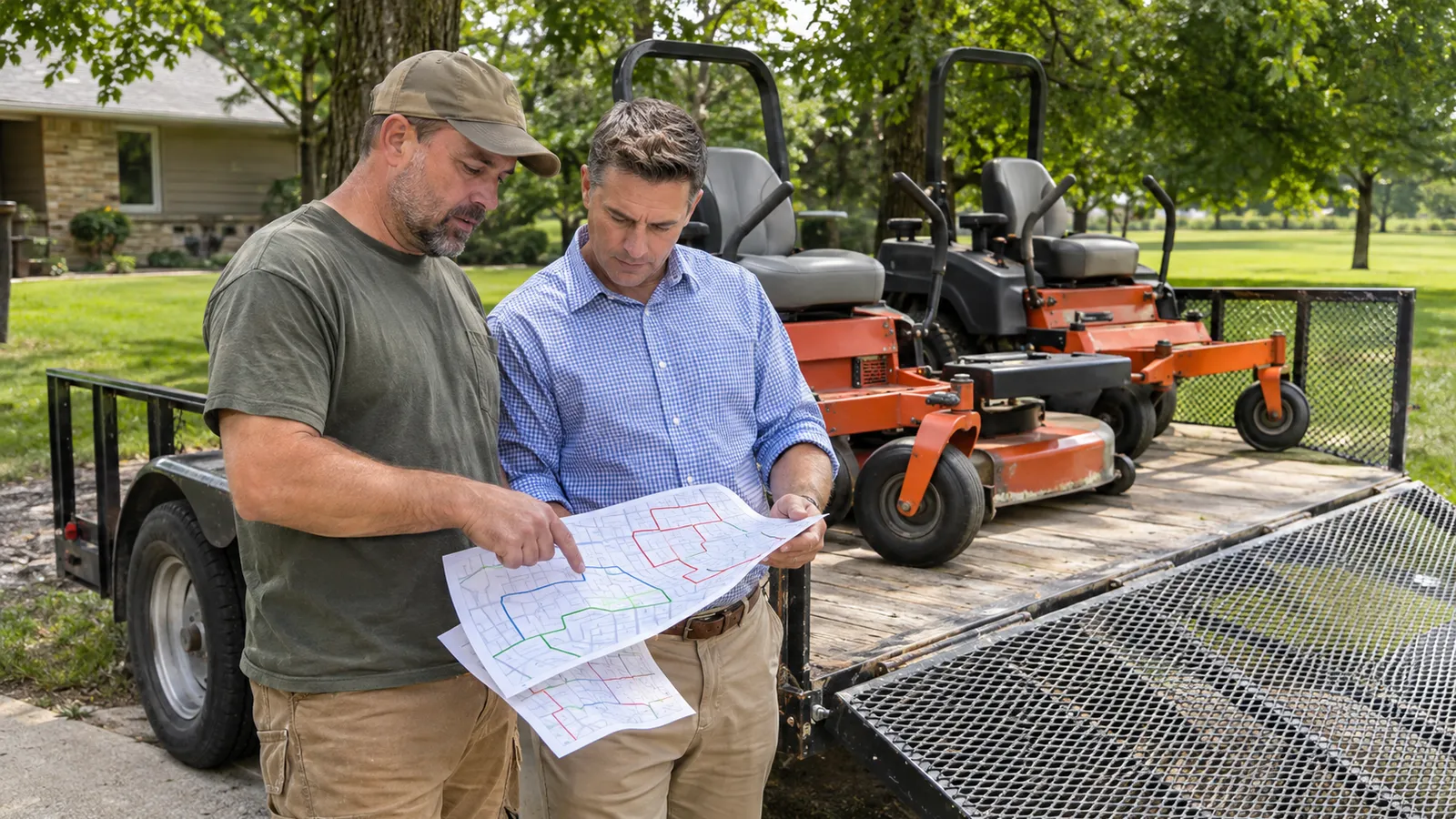
A tight route is cheaper to run than a scattered one. Buyers map your customers and look at drive time. A strong base of commercial properties and homeowners spread across neighborhoods lowers risk.
Concentration matters here too. If a few property managers account for a large share of revenue, buyers discount for it.
Seasons and cash flow
Revenue peaks in spring and summer, and winter work is uneven. Buyers want to see how you cover payroll and equipment payments in slow months, and whether snow or other off season work adds steady income.
Equipment and crews
Mowers, trailers, trucks and skid steers wear out. Buyers will accept only part of depreciation as an add back, since they must fund replacements. Crew leaders are the other key asset, so list their pay and tenure.
Seasonal labor rules and licensing for pesticide application, where you use it, should be in order before a buyer looks.
Before you list
- Revenue split between contracts, one time jobs and snow
- A customer list with contract dates and renewal history
- An equipment list with age, hours and any loans
- Crew pay and years on the job
See how brokers are paid and how the price gets split, then see what your company is worth.